Versace history: Metal, movement and the public image
Versace began in Milan in 1978 under Gianni Versace, linking material experimentation, bodily movement and public image.
ÉPOPLI ·
- Brand
- Versace
- Origins
- Milan, Italy
- Focus
- Clothing and couture
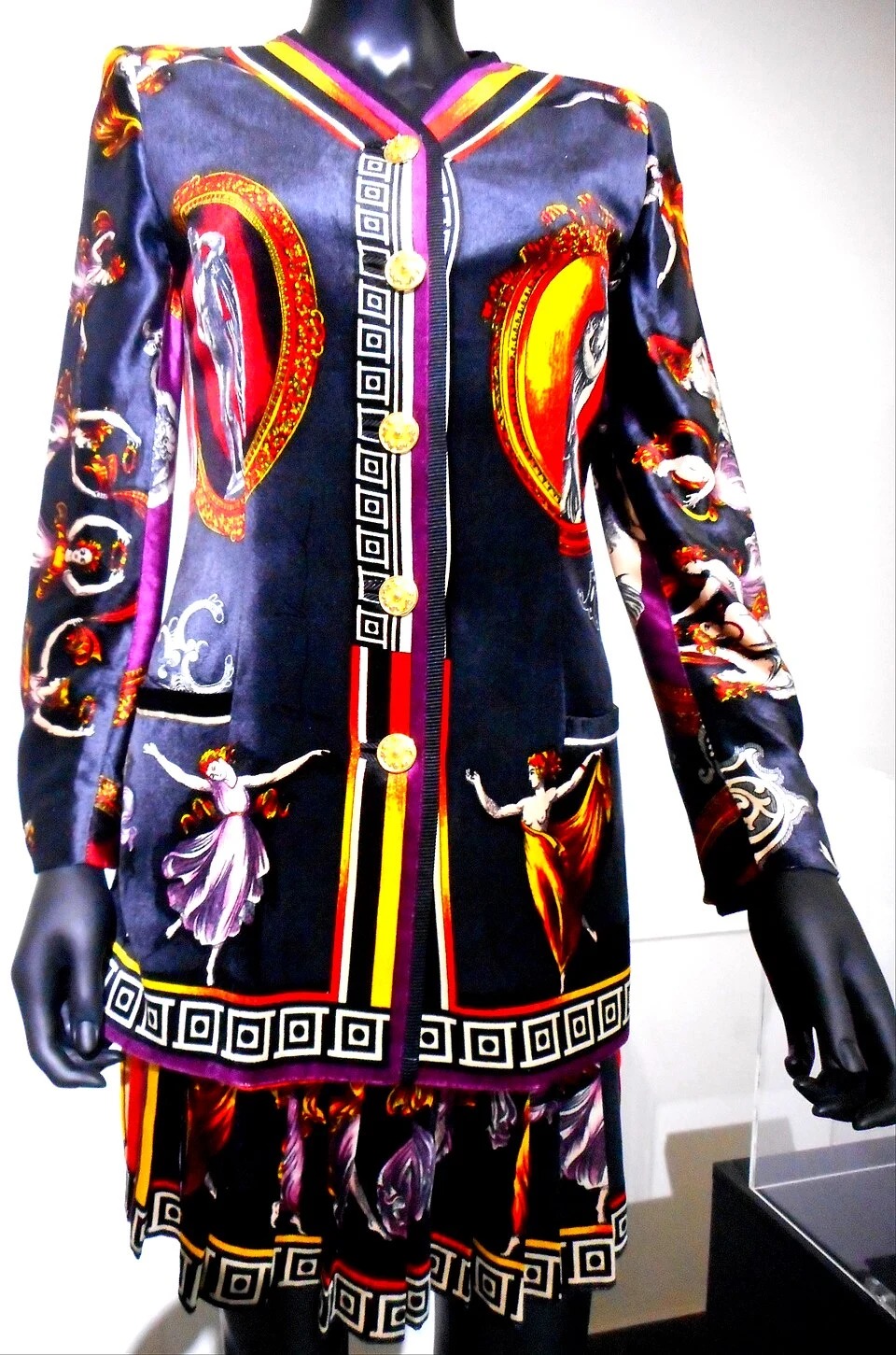
When metal falls like cloth
A 1982 evening gown in metal mesh brings a hard material into a yielding form. This is an instructive entrance into Versace history: spectacle contains a concrete construction problem. Connected metal units reflect light while gathering around the body, but cannot simply be sewn like ordinary cloth. The Met links this difficulty with the design’s relatively straightforward pattern shapes. Shine comes from the material itself rather than an added surface embellishment. Follow where folds gather and how they are supported. A loose, classically suggestive outline meets a different material language, making the object an experiment in construction as well as a conspicuous image.
The Milan beginning of 1978
The year 1978 marks Gianni’s first women’s presentation under his own name in Versace history. The Italian fashion chamber places it within Milan’s growth as an international fashion centre. A founder worked through production, presentation and commercial structures, not taste alone. The name continued into several later periods and categories. Early leather experiments should not be treated as if they already contained today’s entire assortment. A corporate description of present breadth does not date every category to the debut. Separate expanding business scope from the material evidence of particular garments. This makes development concrete instead of turning it into an inevitable story of expansion.
Designing light with folds
Light and folds change together across metal mesh. In Versace history this makes decoration hard to separate from structure: the linked material establishes weight and movement rather than sitting on another cloth. A slowly moving body can create rapidly shifting reflections. At a distance the surface reads as one luminous field; nearby it divides into units. Support and allowance remain essential. Classical-looking drapery is familiar, but its construction conditions differ. Calling the garment only futuristic or ancient misses that meeting of times. Material evidence connects visible effect with making, allowing the technical question to remain present within the visual one.
Fastenings move into view
The spring/summer 1994 safety-pin dress moves a joining device into the visual foreground. The Berlin museum’s example emphasizes boundaries running along the body. Accuracy matters within Versace history: its record distinguishes this object from another version worn by Elizabeth Hurley. Similar images need not share identical cut or material. Enlarged and ornamented pins borrow the meaning of an everyday repair tool while becoming something else. Apparent precariousness contrasts with a completed garment. Exposure alone does not explain the effect. Read boundaries between dark fabric, metal and skin to see how construction directs attention and turns an ordinary device into a recognizable fashion sign.
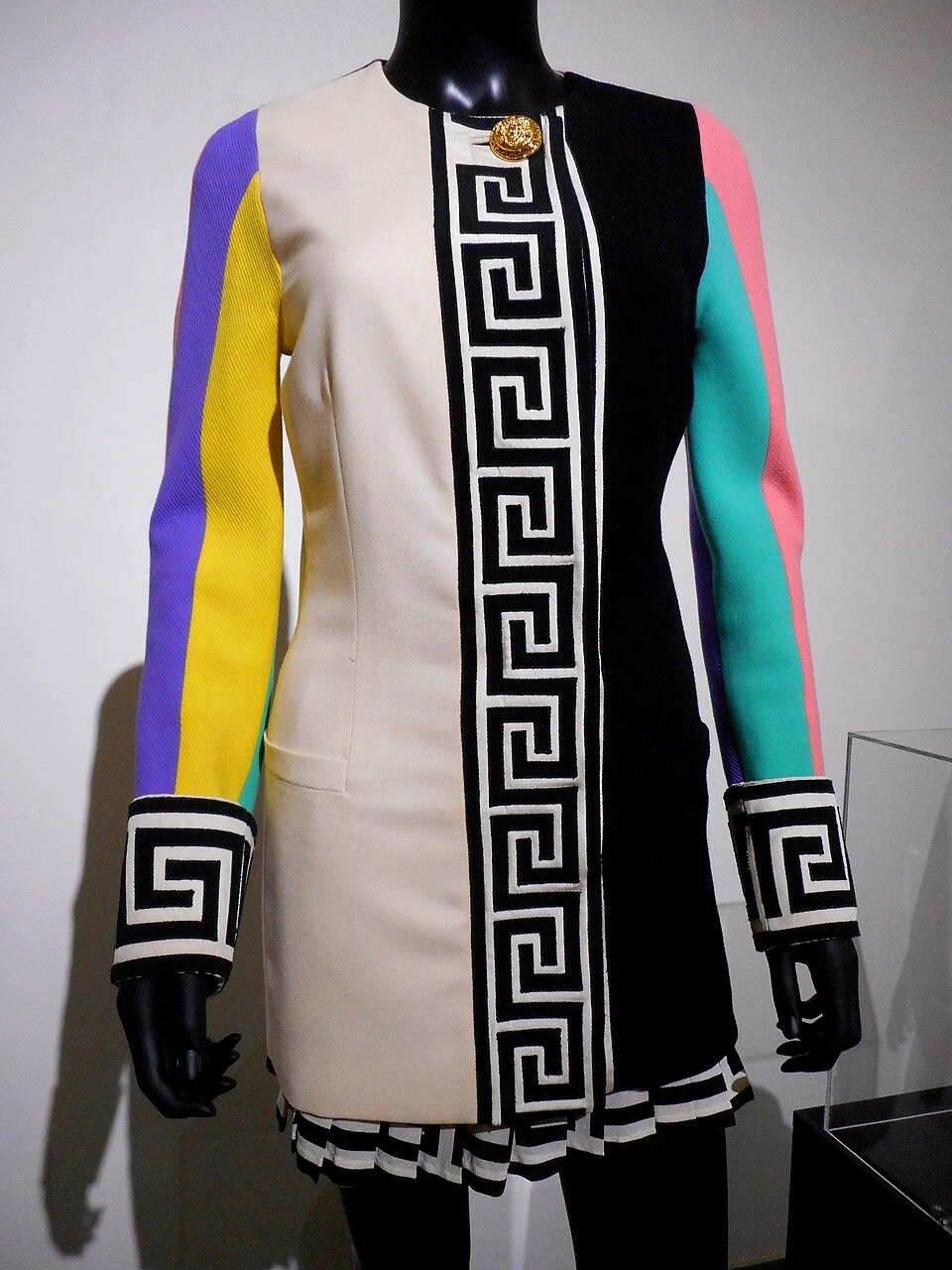

Movement and the weight of a surface
The autumn/winter 1997 couture leather dress combines a fitted ground with jewel-like embellishment. The V&A examines an example associated with Naomi Campbell, including its interior and evidence of wear. A runway-only account of Versace history loses such material information. Decoration adds weight as well as reflected light and can alter flexibility. Support and movement therefore belong together. Museum examination also distinguishes resemblance from proof that a surviving object is a particular photographed garment. A model is not an inert stand: pace and posture give clothing duration. Preserving maker, workshop and wearer turns a spectacular scene into a more exact record of production and performance.
Founder and continuing house
The safety-pin dress and the 1997 leather dress belong to Gianni’s working period. His death that year separates them from the continuing house. In Versace history, Donatella, the family and subsequent production teams must not disappear inside the founder’s name. Recurring symbols meet new proportions and presentation conditions. The official company profile describes activity across several lifestyle areas, but individual attribution still matters. Neither past imagery nor a general brand identity explains every later object. Compare what a returning element meets: another scale or fabric can change its effect. Continuity of name and difference of work can be recorded together without demanding repetition.
Giving spectacle a precise vocabulary
Object-based Versace history translates spectacle into specific questions. Does the material itself shine? Does metal emphasize a boundary? Does decoration follow movement? These examples organize attention differently. Describe light, structure and wear instead of repeating one adjective. Behind a strong photograph lie joining, support and finishing; runway pace and camera distance alter their appearance. Compare front and back, stationary object and worn view. The house’s work makes a body visible while testing how materials can move. Public imagery and detailed making are not opposites. Identifying the decisions that enable an emphatic appearance connects the stage of fashion with the history of actual things.
Timeline
- 1978 — Brand begins in Milan
- 1982 — Metal evening gown now in the Met
- 1994 — Spring/summer safety-pin designs
- 1997 — Founder’s final couture period and death
Questions and answers
When did Versace begin?
Gianni Versace presented a collection under his own name in Milan in 1978.
Is the museum safety-pin dress Hurley’s garment?
The Berlin record specifies that Hurley wore another version from the same collection.
Is metal clothing sewn like ordinary fabric?
The Met notes that metal mesh cannot be joined by ordinary sewing and relates that challenge to its pattern shapes.