Valentino history: White, red and the edge of metal
Valentino developed as a Roman couture house through Valentino Garavani and Giancarlo Giammetti, later expanding through successive design teams.
ÉPOPLI ·
- Brand
- Valentino
- Origins
- Rome, Italy
- Focus
- Couture and accessories
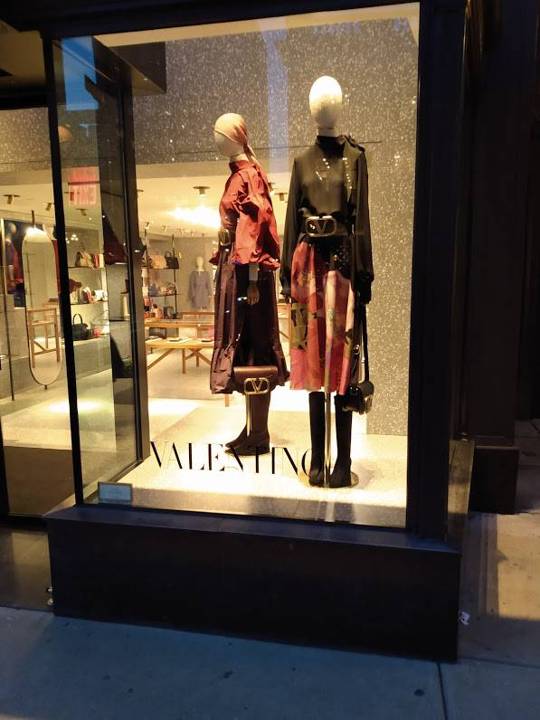
White within a house remembered for red
The 1968 White Collection belongs beside the familiar red image in Valentino history. Restricting colour makes differences in surface, folds and outline more apparent. Pale layers register through shadow; similar hues separate through reflected light. Reduced chromatic contrast is therefore not the same as an absence of decoration. The official chronology identifies this presentation as a major event. Remembering only one signature colour narrows the archive unnecessarily. Place public symbols beside the actual range of objects. A sustained interest can emerge through the adjustment of proportion across materials, rather than through repetition of a single shade. Three kinds of work make that distinction visible.
A house organized in Rome
Valentino Garavani opened his first Rome atelier in 1959; the official chronology distinguishes the formal 1960 foundation with Giancarlo Giammetti. These dates describe different stages in Valentino history rather than necessarily contradicting one another. Design and business organization were connected responsibilities, not interchangeable contributions. A house needs ways to present, order and produce clothing as well as imagine it. The founder’s Paris training and Roman base also resist a story confined to one city. International presentations and shops extended the audience, but commercial growth cannot explain a seam or ornament. Return from the chronology to objects to understand how the organization became visible clothing.
Making visible on a pale surface
Within the White Collection, shared lightness should not erase differences between garments. Colour restraint in Valentino history establishes conditions for examining necklines, sleeve lengths and overlaps. Texture separates what initially appears continuous. Exposure and lighting can remove detail from photographs, so no single image proves every construction decision. Movement on a runway and a stationary museum view provide different evidence. Workshop work is not merely mechanical transcription: fitting determines how imagined proportions meet material and a body. A calm finished surface can conceal that process. Close observation makes decisions visible again without pretending that every detail can be inferred from a distant photograph.
Colour at a final presentation
The founder’s final couture collection appeared in spring 2008. Its finale of red dresses connected individual garments with the house’s accumulated memory. In Valentino history, shared colour should not flatten differences in neckline, exposed shoulder and expanding or descending form. Colour gathers those distinctions into one scene. Runway sequence and a group of models add information absent from an isolated product image. This presentation closes the founder’s working period, not the brand itself. Distinguish an announced retirement from the date of a final show. The organization continued through other designers and workshops, requiring another chapter rather than treating everything later as the founder’s personal work.
Metal follows the edge
Rockstud belongs to a later period. Introduced in 2010 under Maria Grazia Chiuri and Pierpaolo Piccioli’s joint direction, its small pyramidal metal elements follow straps and borders. In Valentino history, this is a precise example of ornament clarifying an outline. On footwear, repeated metal marks the boundary between skin and strap; on bags it guides attention along edges. Small units organize form differently from one large central emblem. Flexible leather contrasts with hard points reflecting light. These accessories should not be credited to the founder merely because his name persists within the company and product naming. Date and creative responsibility matter.
One name, different scales of making
Compare red dresses with Rockstud and continuity need not mean identical manufacture. Couture clothing and accessories occupy different scales within Valentino history: broad colour reads at a distance, while small reflective units sharpen nearby. They also touch the body and reach customers differently. Identify a period and product before assigning the house one adjective. A successor’s use of earlier colour or decoration is not necessarily replication. New materials and conditions change an element’s importance. Record what remains alongside what changes. This respects the founder while allowing later decisions to be read independently, explaining continuity through connected changes rather than an implausible absence of change.
Reading colour with outline
Reading Valentino history is easier when colour and silhouette remain connected. Pale surfaces reveal small material differences; strong colour gathers garments into a scene; metal repetition follows an edge. Each controls the order in which an object is seen. Notice where attention settles, then identify the material and line responsible. Judgments about abundant or minimal decoration can follow. A richly worked surface can possess clear proportion, and a monochrome garment can become complex through overlap and movement. The Roman house gathers such decisions under one name. Looking at actual colour, distance and boundaries makes its development legible beyond famous clients or memorable events.
Timeline
- 1959 — First Rome atelier
- 1960 — Formal house foundation with Garavani and Giammetti
- 1968 — White Collection
- 2008 — Founder’s final couture presentation
- 2010 — Rockstud is introduced
Questions and answers
Was Valentino founded in 1959 or 1960?
The official chronology distinguishes the first atelier in 1959 from the formal house foundation in 1960.
When was the White Collection presented?
The official chronology dates it to the January 1968 couture presentation.
Was Rockstud designed by the founder?
No. It appeared in 2010 during Chiuri and Piccioli’s joint direction.