Schiaparelli history: Making the Familiar Strange
Schiaparelli’s story begins with a Paris house established in1927 and a question about how familiar objects change when worn.
ÉPOPLI ·
- Brand
- Schiaparelli
- Origins
- Founded in Paris, France
- Focus
- Luxury fashion
Schiaparelli history: Making the Familiar Strange
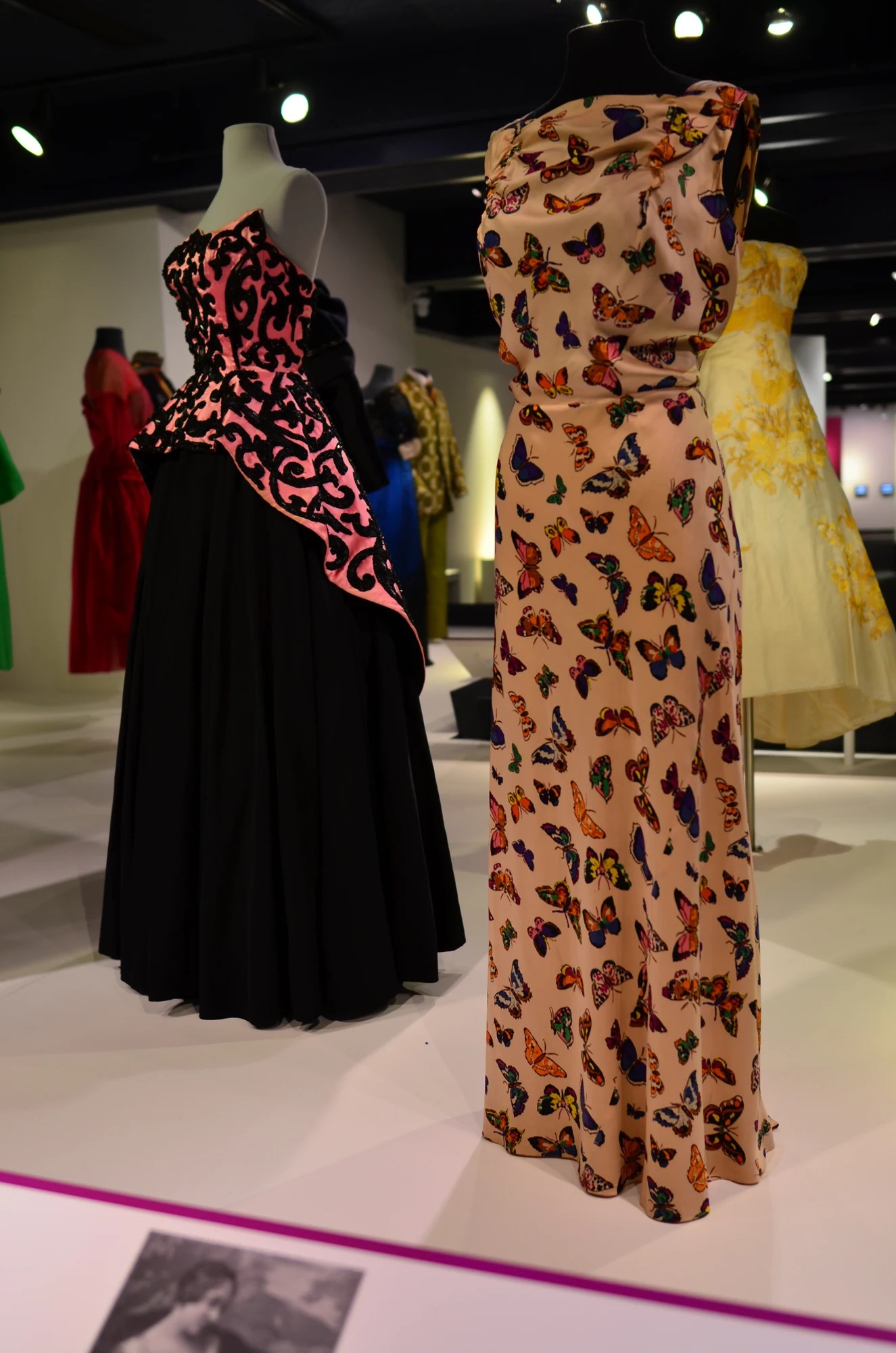
Schiaparelli history begins with a Paris house established in 1927 and a question about how familiar objects change when worn. Elsa Schiaparelli’s knitwear, the lobster dress made with Salvador Dalí and a vivid perfume presentation are different objects that unsettle expectations. Surrealism supplies a historical context, but cannot explain every detail by itself. Scale, position and material remain the evidence. These were also wearable garments and commercial products, not only curiosities. Moving an image into cloth or packaging changes its use as well as its appearance, making the house a study of relationships between media.
A knitted beginning in1927
Schiaparelli history gives the 1927 bow sweater a revealing place. A knitted image suggested a ribbon tied at the neck without requiring a separate knot. Such trompe-l’œil makes perceived structure differ from actual construction. The viewer recognises the familiar object and then notices the discrepancy. Large decoration is unnecessary because the expected shape is already well known. Knitwear moves with its wearer while the image evokes a fixed arrangement. Practical clothing and visual humour therefore operate together. Asking what is physically attached and what is merely represented remains a useful way to approach the house’s subsequent experiments.
The inability to untie the bow completes the joke: what resembles a functional fastening remains an image in the knit.
The lobster on a dress
Schiaparelli history includes the 1937 lobster dress as a collaboration with Dalí, not an isolated act of designer inspiration. A large crustacean image on light white fabric introduced a different association into an elegant dress. The effect associated with Surrealism emerges from this placement rather than strangeness alone. Position on a garment also redirects attention to the body. Documentary facts, contemporary photographs and later interpretations are different kinds of evidence; an available symbolic reading is not necessarily the maker’s single intended meaning. The official collaboration record and FIT’s object study offer complementary ways to investigate that distinction.
Ornament that redirects the eye
Schiaparelli history shows that different visual disruptions should not be collapsed into one technique. Flattening a ribbon and relocating a lobster do different things. The former questions construction; the latter changes an image’s context. The term trompe-l’œil is consequently more precise than a general label of extravagant decoration when it truly applies. Shadows, folds and movement can alter an effect that appears fixed in an advertisement. Contemporary marketing language should also not be projected unchanged onto a 1930s collaboration. Both making and circulating fashion images took place under different conditions, requiring the object’s particular circumstances to remain visible.
Colour, perfume and place
Schiaparelli history extends beyond clothing through Shocking Pink. The official chronology connects the colour with the 1937 Shocking perfume. A body-shaped bottle, packaging and advertising made an invisible scent visually recognisable. Shocking Pink was a strong sign, not the only colour of every product. The house’s 1935 Place Vendôme premises also involved Jean-Michel Frank and Alberto Giacometti. Clothes, interior space and fragrance could thus contribute to a shared experience while retaining different authors. This is one reason to write a brand history separately from a founder’s biography: a commercial and cultural setting involves more than one creative hand.

Closure and revival are different chapters
Schiaparelli history contains a discontinuity rather than an uninterrupted creative line. The couture house closed in 1954; its later revival belongs to another period. Preserved garments and a name can support new work without turning successors’ designs into Elsa’s own creations. Comparing later use of colour, objects and bodily motifs requires dated attribution. Enlargement or a change of material can produce a different work even when a reference is recognisable. Archive use is not automatically copying, and neither is it automatically successful inheritance. The comparison should identify both continuities and changes rather than assume either in advance.
How to read an artistic collaboration
Schiaparelli history is not best understood by counting unusual ornaments. The knitted bow, lobster dress and perfume presentation reveal movements between surface, purpose and sensation. A small sweater can matter as much as a spectacular gown. Collaboration should identify who made an image, who constructed a garment and how the result reached an audience. An artist’s reputation does not guarantee the quality of a dress, while a fashion context does not automatically diminish an artwork. Specific changes between media are the productive subject. Where documents leave intention uncertain, interpretation should remain an interpretation rather than become invented fact.
Timeline
- 1927 — Paris house established
- 1935 — Expansion at Place Vendôme
- 1937 — Lobster dress and Shocking perfume
- 1954 — Closure of the founder-era couture house
Questions and answers
When was the house established?
It began in Paris in1927.
Who collaborated on the lobster dress?
Elsa Schiaparelli and Salvador Dalí collaborated on the1937 garment.
Was its creative history uninterrupted?
No. The1954closure and later revival belong to different periods.