Marni history: Finding Balance in Unfamiliar Forms
Marni’s story can be read through unexpected relations between surfaces and shapes.
ÉPOPLI ·
- Brand
- Marni
- Origins
- Founded in Milan, Italy
- Focus
- Luxury fashion
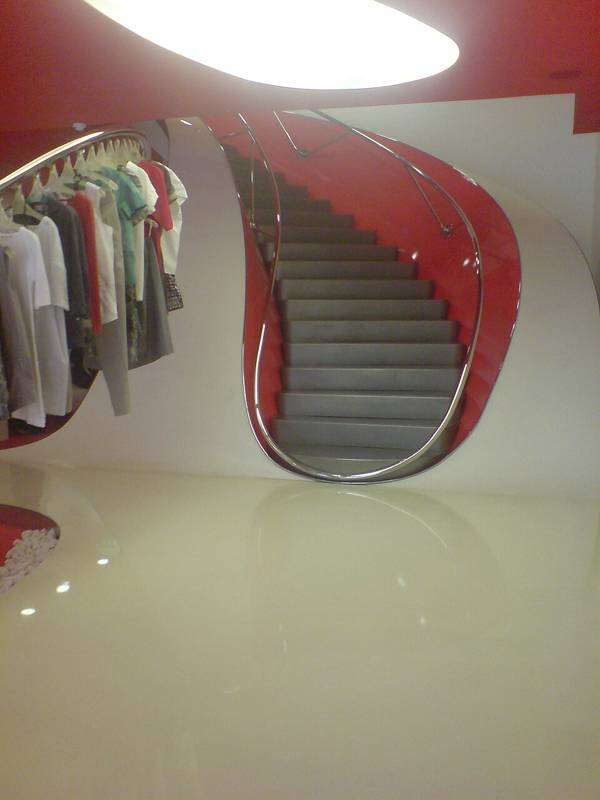
Marni history: Finding Balance in Unfamiliar Forms
Marni history can be read through unexpected relations between surfaces and shapes. Founded in Milan in 1994, the brand does not rely only on neatly matching elements. Large areas and small fittings, soft materials and hard ornament can remain visibly different. A change of colour can divide an otherwise familiar volume into new visual parts. Two bags and a presentation environment offer different scales of observation: a reflective closure, an elongated container and a paper setting. Rather than treating the brand as an undefined eccentric taste, these objects reveal particular decisions about where the eye pauses and how a shape holds together.
Beginning as a family enterprise in Milan
The enterprise established by Consuelo and Gianni Castiglioni forms the starting point of Marni history. Vogue records their joint foundation, while OTB confirms Milan and 1994. Creative work and business organisation are connected contributions rather than interchangeable roles. This background reminds the reader that a garment is both an expression of choices and a product moving through production and retail. Clothes arranged together in a shop establish different relations from an outfit on a runway. A brand’s character is therefore not completed by one striking form. It develops across objects, presentations and their encounters with people.
The visible closure of Trunkaroo
The Trunkaroo makes closure a visual centre within Marni history. The official description pairs nappa with reflective magnetic fastenings. A soft surface and a hard-looking reflective element create different sensory expectations, joining function and ornament. The brand’s reference to childhood treasure chests is its own explanation, not a memory shared automatically by every owner. Opening, closing and keeping things provide a practical connection to that account. The visible contrast between fitting and surface can be examined independently of the story. Related names should not be mistaken for identical construction across a range of accessories.
The elongated outline of Trunkette
Introduced for autumn–winter 2026, the Trunkette refers back to an established bag design in Marni history. The official page identifies a continuing flap and spherical metal closure within an elongated outline, accompanied by long tubular handles. Examining proportion means considering the relations between container, handle and hardware rather than dimensions alone. A familiar fitting changes its effect when the shape around it changes. Polished surfaces coexist with softer folds. Hand-held and shoulder-worn views also place the object differently against a body. These construction choices suggest uses without guaranteeing that every wearer will experience comfort in the same way.
A thirtieth year inside a paper cave
A paper cave in the tunnels of Milan’s central station marked the brand’s thirtieth year in 2024. OTB’s account gives Marni history an example of a hand-made environment at architectural scale. Viewers entered a surface before seeing the clothes moving within it. The setting was therefore not a neutral absence. Perceived colour also depends on surroundings: a textile appears differently against a bright floor or dark wall. Paper folds and garment folds are not the same technique, but they can draw attention to each other. A small bag fastening concentrates attention; an encompassing environment determines its wider field.
A new creative voice within the name
OTB’s current official page identifies Meryll Rogge as creative director. Marni history continues through changes of authorship rather than preserving one person’s decisions indefinitely. Dating objects and presentations prevents earlier and contemporary work from being merged. Altering proportion or placing an inherited fitting within another outline can provide continuity without copying a complete object. Conversely, a familiar appearance can accompany different materials or ways of carrying. A successor’s contribution is better examined through these decisions than through resemblance to an atmosphere alone. The name persists, while responsibility for specific designs must remain accurately distinguished.
Reading accessories alongside presentation
Marni history brings the small scale of accessories into conversation with the larger scale of presentation. Closure and folding can be studied in a bag; surrounding surfaces can be studied around a runway. Different scales direct attention in different ways. Comparing frontal, side and worn views separates an impression of surface from an understanding of volume. Reflective metal, a soft body and an extended handle each emphasise something specific. The resulting unfamiliarity becomes legible as a rearrangement of ordinary functions rather than unexplained oddness. Remembering those structural differences offers a more useful connection between periods than remembering a fashionable shade alone.
Timeline
- 1994 — Founded in Milan
- 2024 — Thirtieth-anniversary Milan presentation
- 2025 — Meryll Rogge appointed
- 2026 — Trunkette introduced
Questions and answers
When did the brand begin?
Consuelo and Gianni Castiglioni established it in Milan in 1994.
When was the newer bag introduced?
The official page dates its introduction to autumn–winter 2026.
Who currently leads creative direction?
The official OTB page identifies Meryll Rogge at the time of writing.